Understanding Hair Loss
The Norwood Scale: Find Your Stage of Hair Loss
The Norwood scale grades male pattern baldness from stage 1 to 7. See what each stage looks like, how to find yours, and what to do next at every stage.
If you’re checking your hairline in the mirror and wondering how bad it is, the Norwood scale is the tool doctors and hair clinics use to put a name on it.
Short answer: the Norwood scale (also called the Hamilton-Norwood scale) sorts male pattern baldness into seven stages. Stage 1 is no visible loss, stage 3 is where recession at the temples becomes clearly visible, and stage 7 is the most advanced, with hair left only around the sides and back of the head. Finding your stage takes a minute and tells you which options are worth looking at.
- Full hairNorwood 1
- RecedingNorwood 2–3
- Thinning topNorwood 4–5
- AdvancedNorwood 6–7
- ShavedYour call
The seven Norwood stages
Dr. Norwood published the scale in 1975, building on an earlier system by Hamilton, after using it to grade hair loss in 1,000 adult men. A review of male pattern hair loss classifications describes it as running from type I to type VII, with a type “A” variant for people whose loss starts at the front rather than receding at the temples. In plain terms:
| Stage | What it looks like |
|---|---|
| 1 | No significant hair loss or recession |
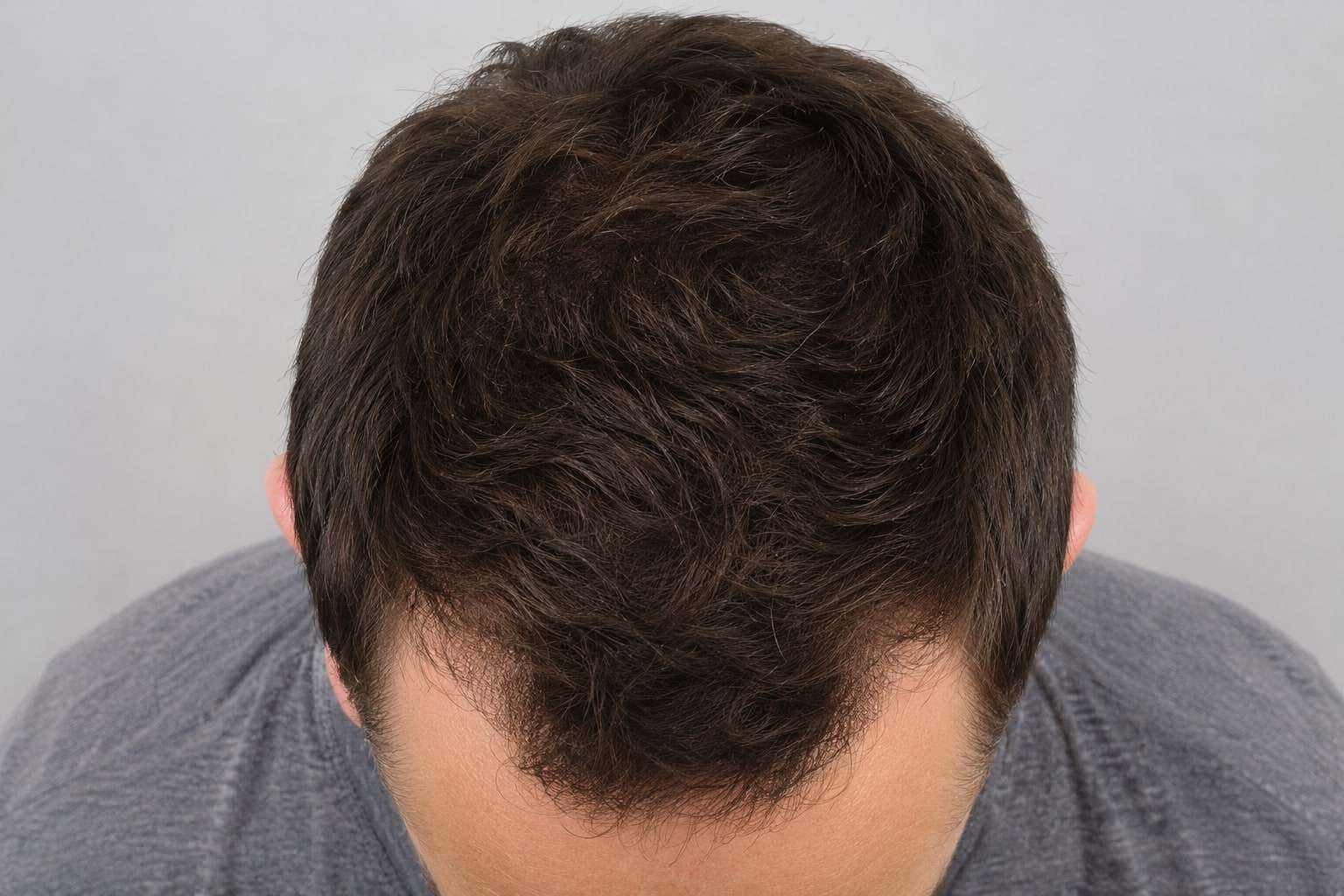
| 2 | Minor recession at the front hairline, often just at the temples |
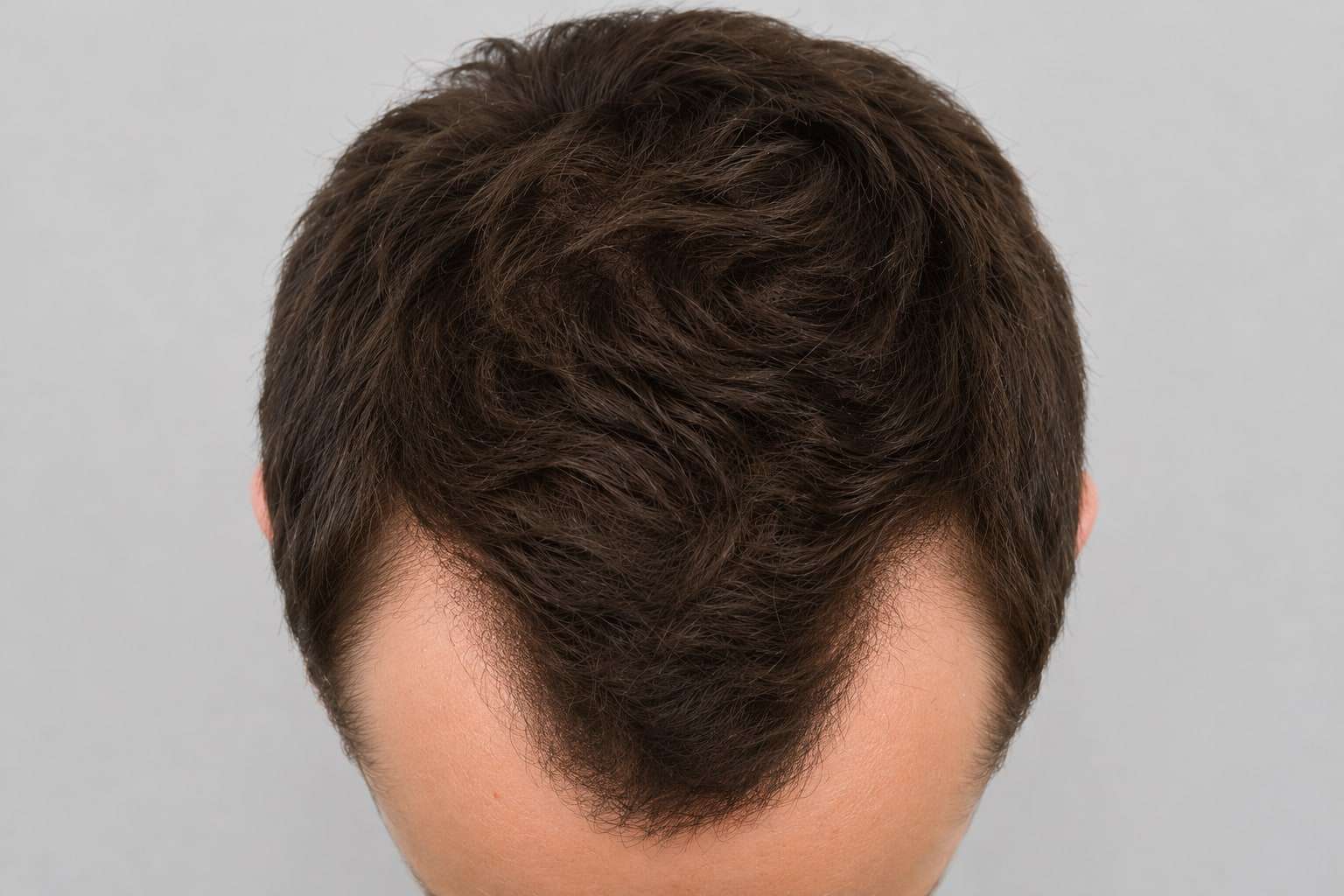
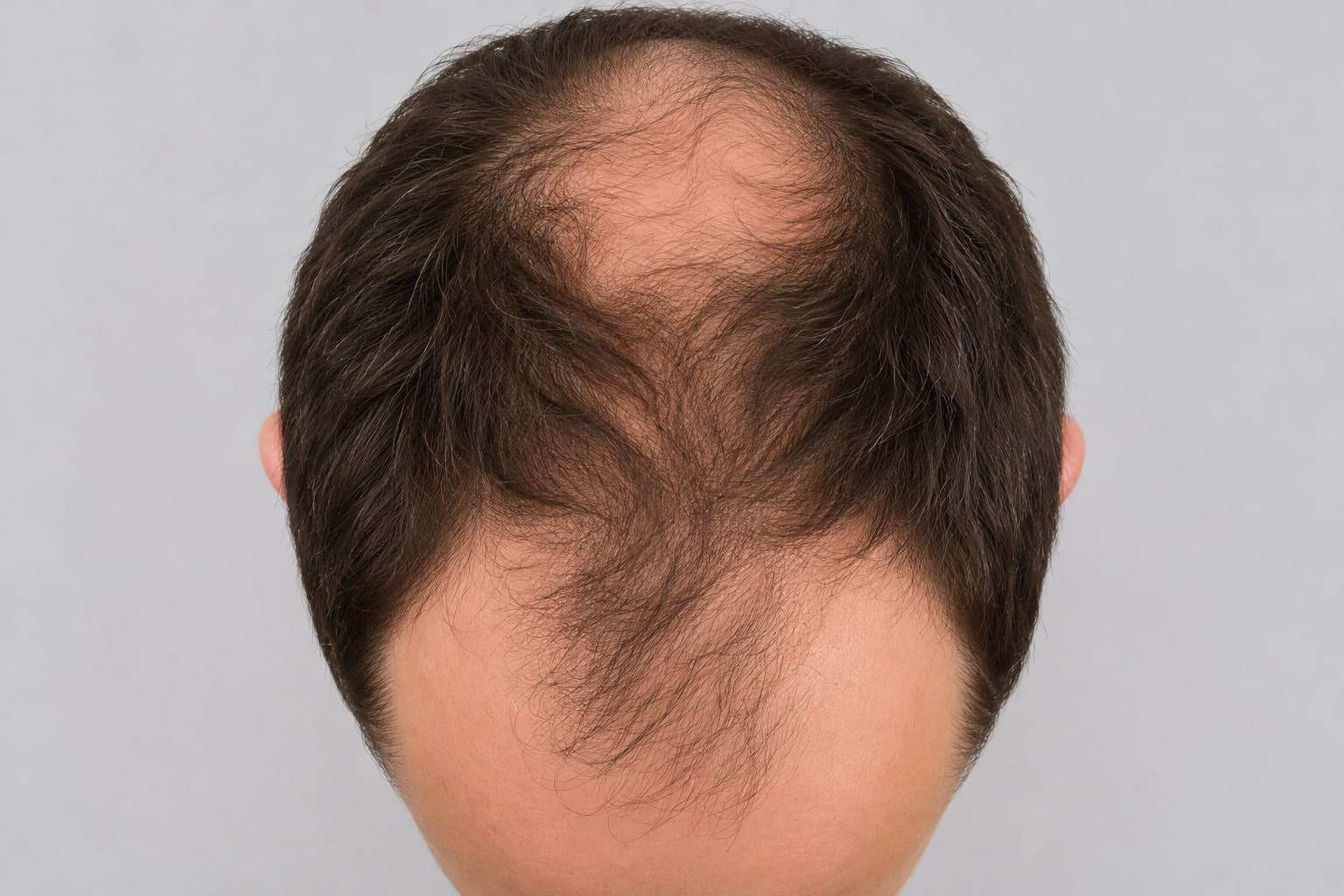
| 3 | Deeper recession at the temples, usually in an M or U shape |
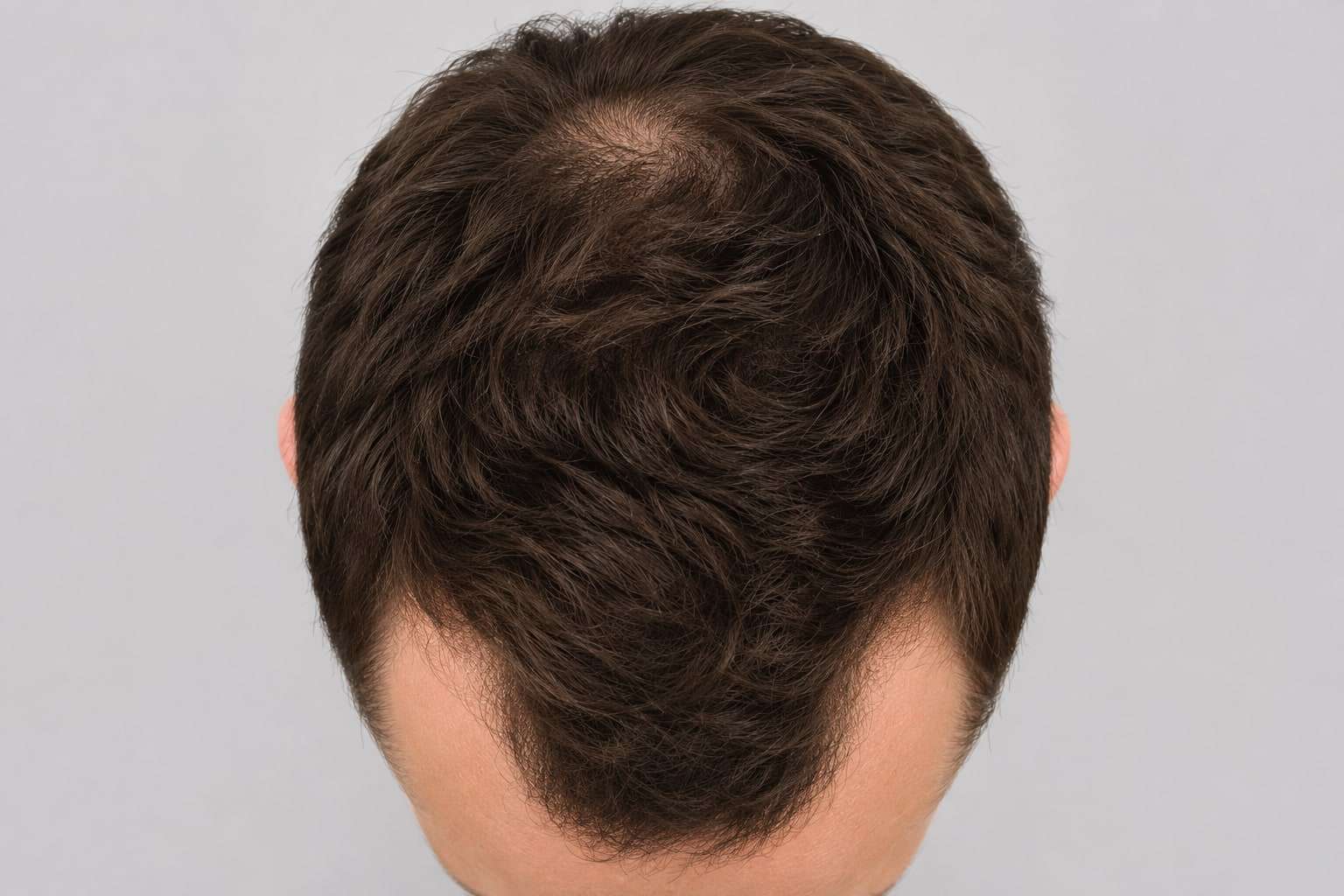
| 3 vertex | Stage 3 recession plus thinning on the crown |
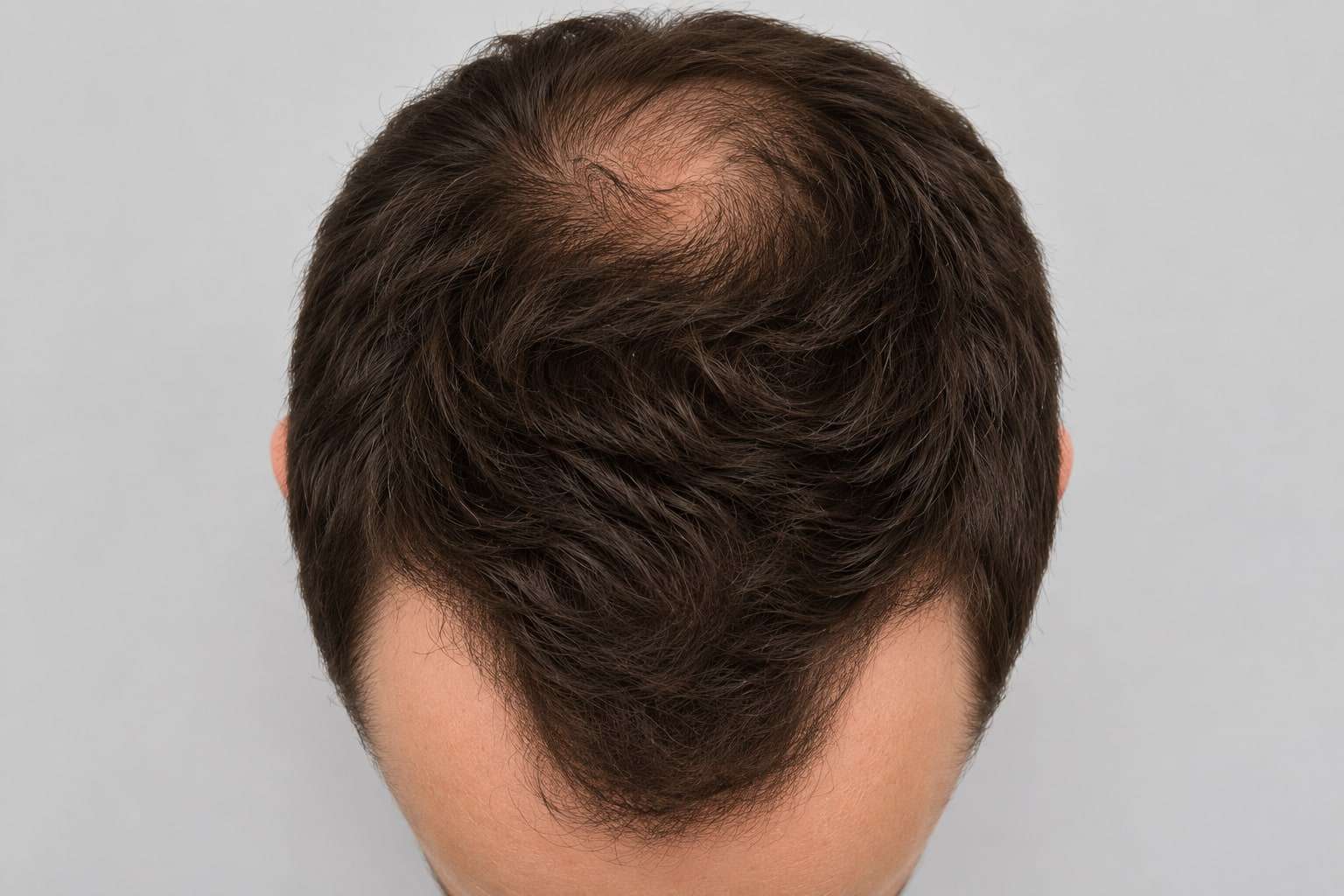
| 4 | More frontal loss and a thinning or bare area at the crown, still separated by a band of hair |
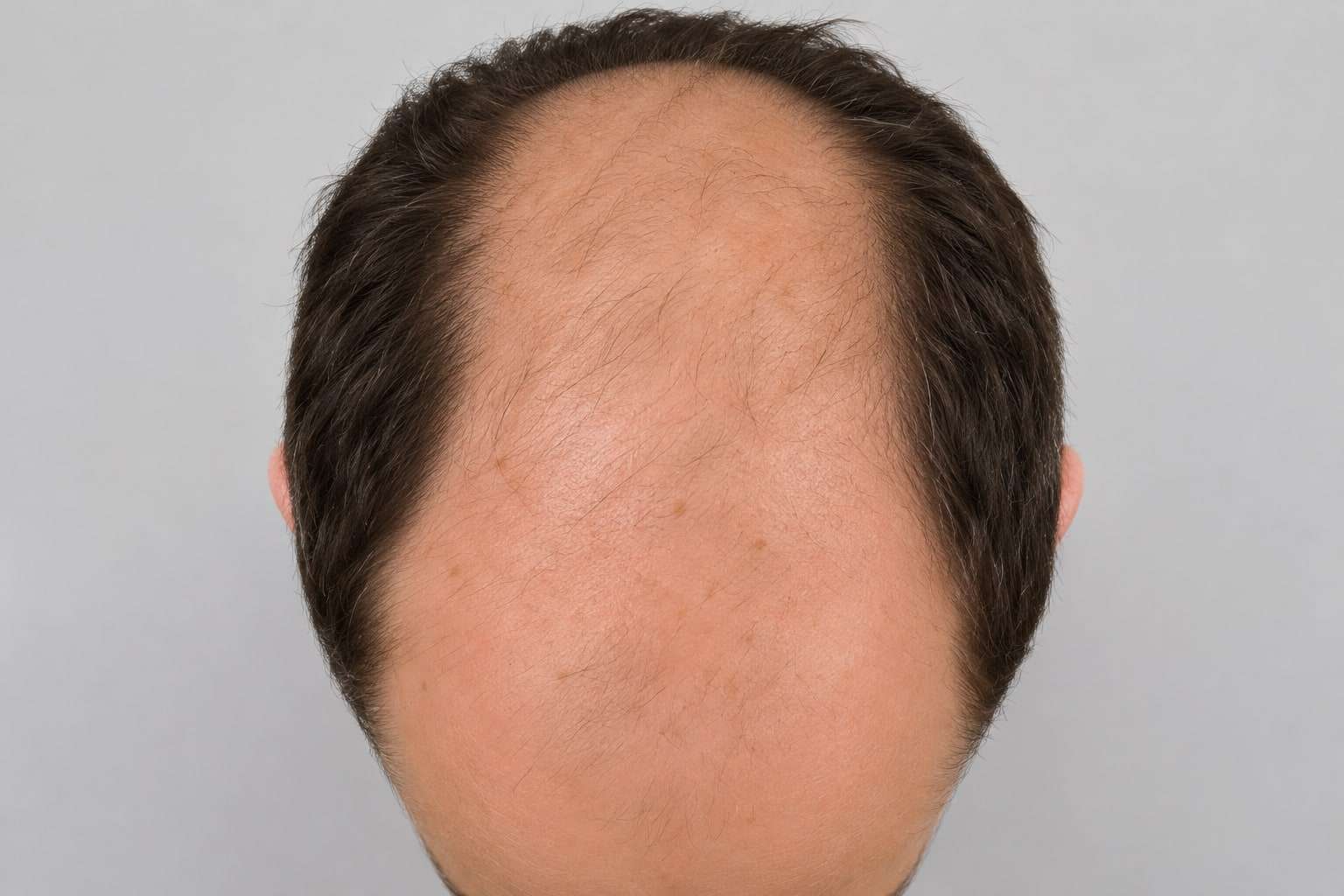
| 5 | The same pattern, larger, with the band between front and crown getting thinner |
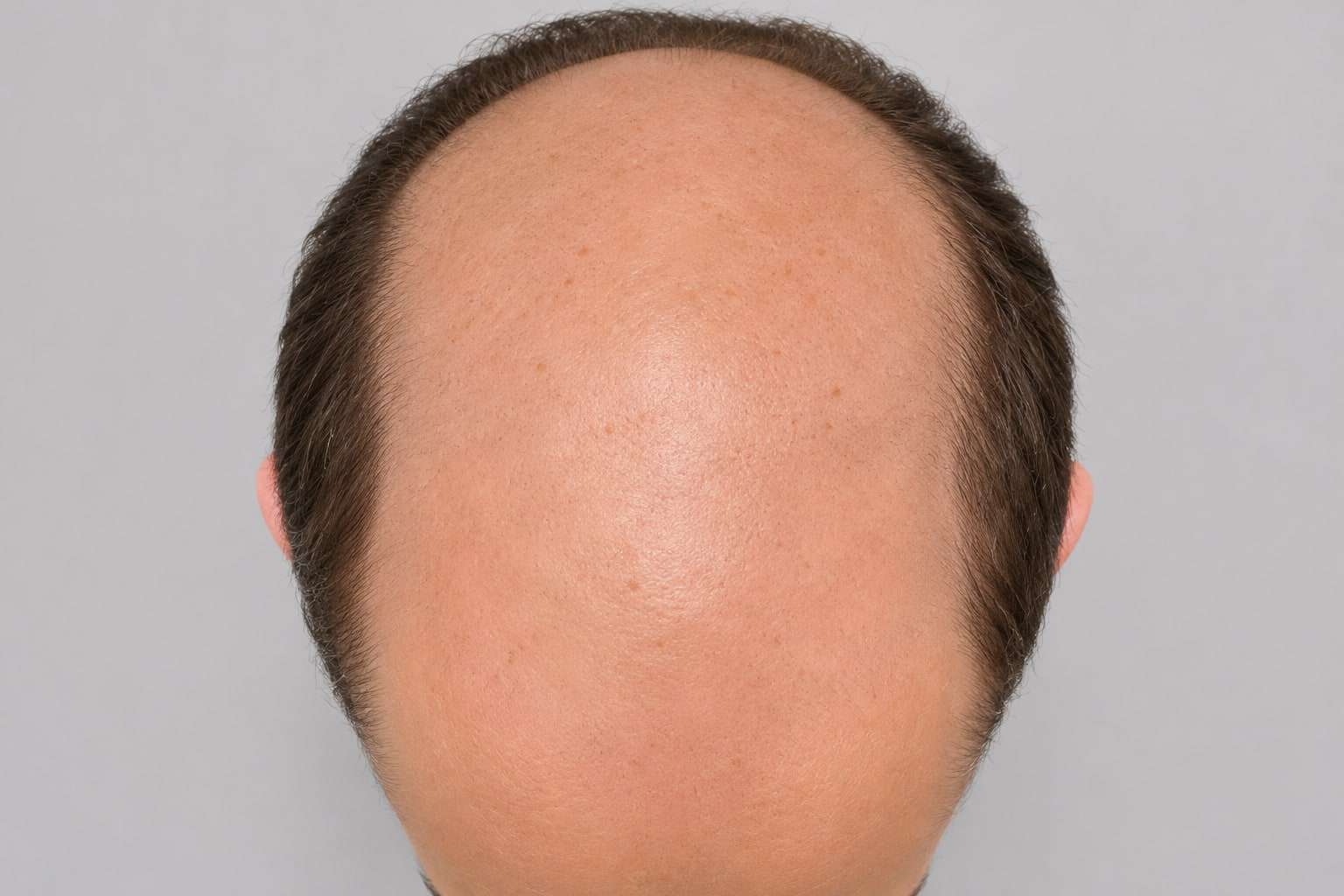
| 6 | The band disappears and the bald areas join up |
| 7 | Only a horseshoe of hair around the sides and back remains |
The review describes types IV to VI as progressively more frontal and crown loss, ending at type VII, where only the back and sides of the scalp keep significant hair. The stage descriptions in the table are a plain-language simplification, so use them as a guide rather than a diagnosis.
How to find your stage
- Use good light and a mirror, or ask someone to take photos. Dry, clean, unstyled hair works best. Take a front shot, one from each side and one from above, so you can see the crown, which is easy to miss.
- Compare to the descriptions above, or pick the drawings that match you in our Norwood stage finder. Look at the temples first, then the crown.
- Re-check every few months under the same conditions. One photo tells you where you are. Several photos tell you whether you’re moving.
If you land between two stages, that’s normal. Hair loss doesn’t move in tidy steps.
How reliable is the Norwood scale?
It’s the most widely used system, and it has limits worth knowing before you obsess over a number.
A study in the Journal of Dermatology had 8 dermatology specialists, 17 dermatology residents and 15 general physicians classify 100 sets of photographs of pattern hair loss. The authors describe the Norwood-Hamilton classification as the most commonly used worldwide but one with many limitations, and found it had the lowest agreement between raters of the systems they compared, including a newer alternative called the basic and specific (BASP) classification. The authors were comparing a classification they favor, so read the result with that in mind.
Another study of 1,731 Korean men proposed a simpler alternative because it found the Norwood method too detailed for surgical planning, and reported one pattern it couldn’t classify using Norwood at all.
What this means for you: the scale is a handy shorthand, not a precise measurement. Two people can disagree on whether you’re a 3 or a 4, and your pattern may not match any picture exactly. Don’t make treatment decisions from the number alone.
Is it really pattern baldness?
The Norwood scale only applies to male pattern hair loss. (Not sure what’s behind your thinning? See what causes hair loss in men.) If your hair is shedding evenly all over, and it started suddenly after illness, a crash diet or a stressful few months, you may have telogen effluvium, a temporary shed that usually recovers. Rapid weight loss, including on GLP-1 medications, is one possible trigger. A doctor can tell the two apart, and they can happen together.
What to do at each stage
These are starting points, not personal medical advice. Anything involving a prescription is a conversation to have with a doctor or other prescriber.
- Stage 1–2 (early recession, or none): you have the most hair to protect. Many men at this point are just seeing their hairline mature (see receding hairline: normal or balding?), but if you see steady change, photograph it and start learning the options. Our guide to minoxidil covers one of the best-studied ones.
- Stage 3–5 (clear thinning): this is the stage where most treatment decisions are made. Medical treatments aim to slow the loss and may regrow some hair, and the earlier you start the more hair there is to keep. Read about the evidence behind each option before you spend money.
- Stage 6–7 (advanced): medications generally have less hair to work with. Realistic choices are a hair transplant (limited by how much donor hair you have at the back and sides; see what a hair transplant costs), scalp micropigmentation, or deciding to shave and own it. All of them are valid.
The bottom line
The Norwood scale is a quick way to name where you are, and a useful yardstick for tracking change over time. It’s not perfectly reliable, and it doesn’t tell you what you have to do. Find your stage, take photos, and then pick your next step: start with the minoxidil guide if you’re still early, or read about scalp massage if you want a low-risk habit to add alongside it.
Sources
- Male pattern baldness: classification and incidence (Study, Southern Medical Journal, 1975)
- Classification of Male-pattern Hair Loss (Review, International Journal of Trichology, 2017)
- Reliability of the pattern hair loss classifications: a comparison of the basic and specific and Norwood-Hamilton classifications (Study, The Journal of Dermatology, 2013)
- A new classification of male pattern baldness and a clinical study of the anterior hairline (Study, Aesthetic Plastic Surgery, 2000)
This article is for education only and is not medical advice. Talk to a doctor or dermatologist before starting or changing any treatment. Medical disclaimer