What Is Hair Miniaturization? Why Hair Thins Before It Goes
Miniaturization
The shrinking of hair follicles in male pattern baldness: thick terminal hairs are replaced, cycle by cycle, by short, fine vellus-like hairs.
- Terminal hairDeep follicle, thick pigmented hair
- ShrinkingShorter growing phase, thinner hair
- Thinner stillHair looks wispy, scalp shows through
- Vellus-like hairShallow follicle, fine short hair
At a glance
- What shrinks
- The follicle, and with it the hair it makes
- Terminal hair
- Thick, pigmented, long: normal scalp hair
- Vellus hair
- Short, fine, colorless fuzz
- Driven by
- DHT acting on genetically sensitive follicles
- Reversible?
- Partly: finasteride has reversed it within one hair cycle in some men
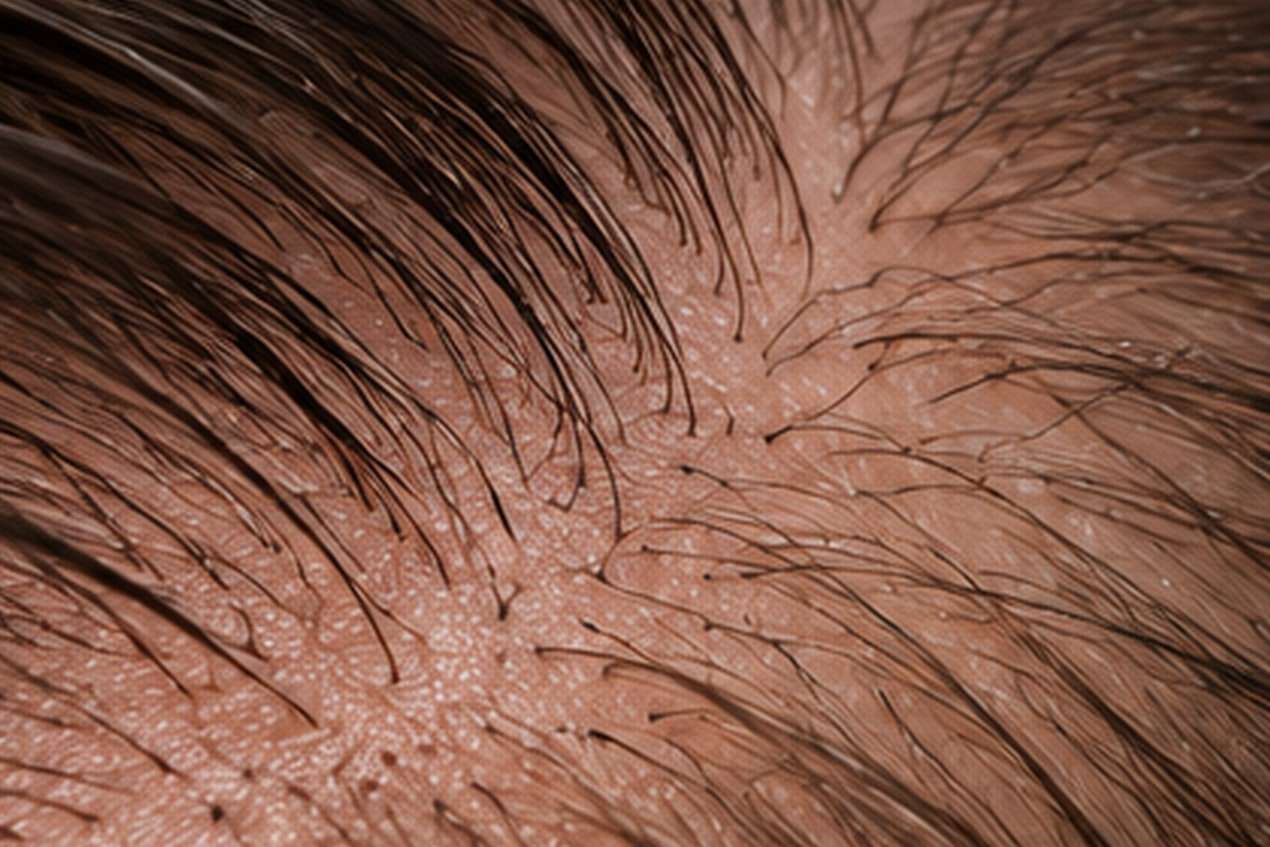
Miniaturization is the defining change in male pattern baldness. Hair follicles don’t die off one by one; they shrink, and each smaller follicle makes a smaller hair. Thick, pigmented terminal hairs are gradually replaced by vellus-like hairs: short, fine and nearly colorless, like the fuzz on your forearm. The follicle is still there, which is why the scalp of a bald man isn’t truly hairless when you look closely.
Why it happens
In follicles that are genetically sensitive, DHT binds to androgen receptors and shortens the growth phase of the hair cycle. A hair that grows for less time ends up shorter and finer. A 2001 analysis added two ideas: that the shrinking can happen in large steps rather than tiny ones, and that it may come down to the dermal papilla, the cluster of cells at the base of the follicle that controls its size, losing cells. That second point is a hypothesis, not settled fact.
What it looks like
Before you see a bald patch, you usually see hair that looks thinner, more scalp showing under bright light, and a hairline or crown that won’t hold a style. That’s miniaturization in progress: the follicles are still there, but each hair carries less coverage. A shedding review uses it as one way to tell the two common types of loss apart: a higher share of vellus hairs points to pattern loss, while heavy shedding of normal hairs points to telogen effluvium.
Can it be reversed?
Partly, and the earlier the better. Because the follicle survives for a long time, treatment can push it back toward making thicker hair. The 2001 paper describes miniaturization being reversed within one hair cycle in men who responded to finasteride, with biopsies to confirm it. But reviews are clear that today’s treatments allow only partial regrowth at best: and the same review notes that early treatment gets the best results. See how to stop hair loss for the options and their evidence.
Published by the Say No to Baldness editorial team
Related terms
Sources
- Possible mechanisms of miniaturization during androgenetic alopecia or pattern hair loss (Review, Journal of the American Academy of Dermatology, 2001)
- Androgenetic alopecia: An update (Review, JAAD International, 2023)
- Male androgenetic alopecia (Review, Expert Opinion on Pharmacotherapy, 2010)
- Telogen Effluvium: A Review of the Literature (Review, Cureus, 2020)